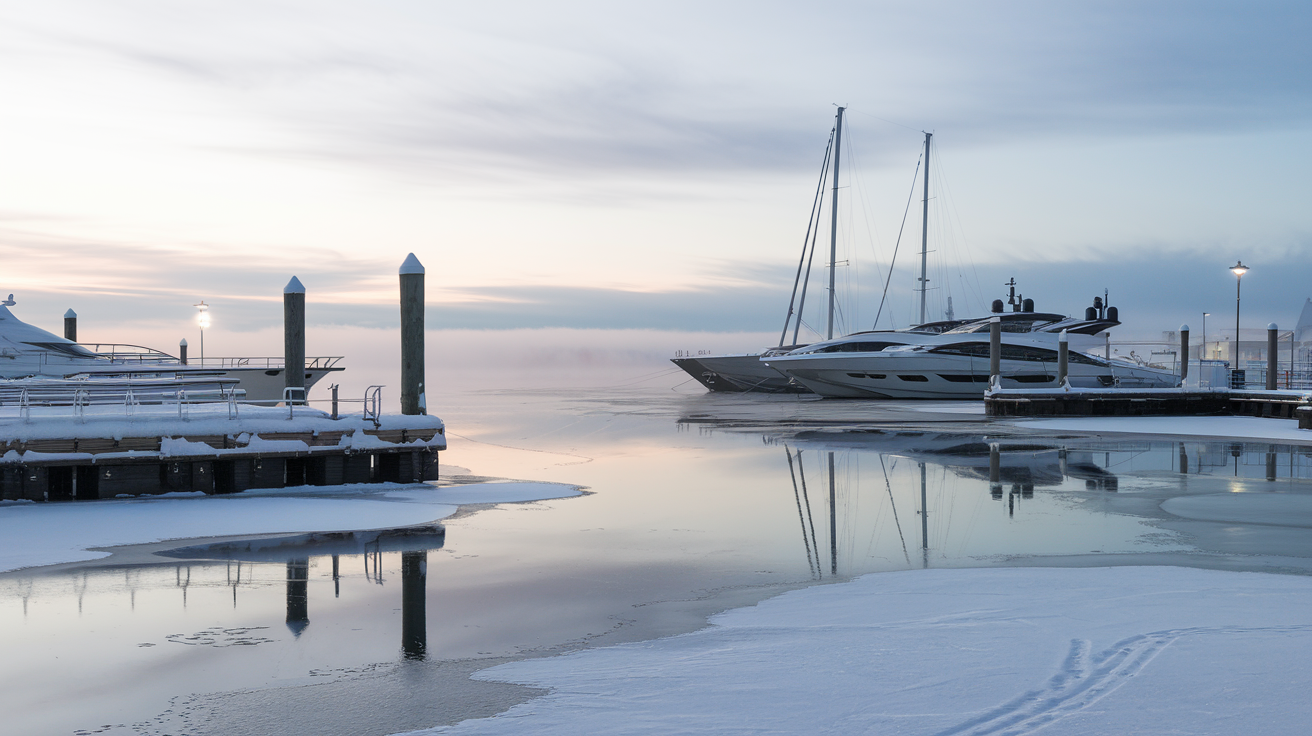
Winter sailing: where to charter between December and April
Mediterranean charter bases mostly shut between November and March. The boats come out, the marinas empty, and the crews who sail all year go west.
This is a guide to where the season runs when the Mediterranean season does not, and to the practical details that decide whether a winter charter works: when the hurricane risk actually ends, what a mooring ball costs, and which anchorages fill by lunchtime.
The Caribbean season, with dates
The dry season runs from December to April. Steady easterly trade winds, temperatures in the mid to high twenties Celsius (high seventies to low eighties Fahrenheit), short showers rather than days of rain, and calm water in the lee of the islands.
Hurricane season runs from June to November and peaks between August and October, per the NOAA National Hurricane Center. That is not a reason to avoid the Caribbean, it is a reason to charter inside the dry season, which is exactly the window when the Mediterranean is closed. The two seasons fit together, which is the whole argument for winter sailing.
January and February are the busiest months of the dry season. Book the boat early and expect the popular anchorages to be busy by mid-afternoon.
The British Virgin Islands
The easiest place in the world to learn to sail between islands. Everything is within line of sight, the channels are deep and marked, the water is flat in the lee of Tortola, and the passages are measured in single-figure miles.
Jost Van Dyke is the reason a lot of people book. White Bay has the Soggy Dollar Bar, which is where the Painkiller was invented and which has no dock: you swim or wade ashore, which is how it got the name. There are around eight to ten mooring balls at roughly US$25 a night and they go early. Arrive before 11 in the morning or after 4 in the afternoon, and you miss the day-boat crowd entirely.
Around the corner in Great Harbour, Foxy’s Tamarind Bar has been running since 1968 and is the island’s best-known beach party. Foxy Callwood was appointed MBE in 2009 for his contribution to BVI heritage and tourism, which tells you how long this has been part of the place rather than a late addition. Further east, Foxy’s Taboo sits near the Bubbly Pool.
Virgin Gorda has the Baths, a granite boulder field with pools and passages between the rocks. Get there early: the day boats arrive mid-morning.
Norman Island has the caves and the Willy T, a floating bar and restaurant anchored off. Anegada is the flat coral island north of the BVI group, reached across a stretch of open water, and it is where the lobster is.
The wreck of the Rhone off Salt Island is the dive everyone does.
The Grenadines
Further south, less developed, and better if you have chartered before.
Tobago Cays is the anchorage: a group of small islands behind Horseshoe Reef, with turtles in the shallows and beach barbecues in the evening. Buoy and park fees are set by the Tobago Cays Marine Park. You anchor inside the reef with the open Atlantic breaking a few hundred metres away, which is a strange and excellent thing to do.
Bequia is the sailing island, with Admiralty Bay and Port Elizabeth as the main stop. Mustique requires a mooring buoy, which is not optional and which is expensive, at around US$80 a night. Basil’s Bar sits over the water and runs a Wednesday jump-up.
Union Island has Happy Island, a bar built on a foundation of conch shells in the middle of the anchorage, and Chatham Bay for a quiet night. Mayreau has Salt Whistle Bay.
St Martin and Sint Maarten
One island, two countries, and a good provisioning stop.
Grand Case on the French side is the eating: a street of restaurants plus the lolos, the roadside barbecue stalls, which are better than most of the restaurants. Pinel Island and Tintamarre are the day anchorages. Simpson Bay Lagoon on the Dutch side is the superyacht harbour and the home of the Heineken Regatta in March.
The Sunset Bar at Maho Beach is where the aircraft land directly over the beach, which is either the highlight of the trip or a reason to go somewhere else.
One caution: Hurricane Irma did heavy damage here in 2017 and parts of the island are still rebuilding. Confirm a venue is trading before you plan an evening around it.
Other winter options
Less developed for charter than the Caribbean, and worth knowing about.
| Destination | Season | Suits |
|---|---|---|
| Thailand | November to April | Sheltered island cruising, short hops, limestone scenery |
| The Maldives | January and February best | Calm water, diving, mostly crewed charters |
| Mexico, Yucatán and Baja California | December to March | Warm and dry, reefs and ruins |
| Cape Verde | Winter, reliable trade winds | Experienced crews, fewer services |
| Florida Keys | Winter | Easy logistics from North America |
These come from the earlier version of this article and are worth checking against current fleet availability before we promote any of them.
What a winter charter costs beyond the boat
The Caribbean charges differently from the Mediterranean, and the differences catch people out.
| Item | How it works |
|---|---|
| Mooring balls | The normal way to spend the night in the BVI and much of the Grenadines. Around US$25 in Jost Van Dyke, around US$80 in Mustique. |
| Cruising permits and park fees | Charged per person or per boat, by territory. The BVI, the Grenadines and St Martin each have their own. BVI cruising permits are issued by HM Customs under the Cruising and Home Port Permit Act 2021, not by the ports authority. |
| Customs and immigration | Every island group is a separate country. Clearing in and out takes a morning and costs money. |
| Provisioning | More expensive than the Mediterranean, because most of it is imported. Buy the bulk at the base. |
| Fuel | You will motor less than in the Mediterranean. The trades are reliable. |
Qualifications
Requirements are set by the charter company rather than by a single European-style rulebook, and they vary by territory. Expect to submit a sailing CV describing the boats you have handled and the miles you have logged, and expect to be asked about experience with mooring balls rather than anchoring, because that is how you will spend most nights.
Confirm the exact requirement with the operator in writing before you pay. A qualification that is accepted in Croatia is not automatically accepted in the BVI, and the reverse is also true: a US Coast Guard licence is not accepted for a Mediterranean bareboat charter.
What to expect from the sailing
Trade winds of 10 to 20 knots (Force 3 to 5) from the east, most days, most of the season. That is enough to sail properly and steady enough that you can plan around it, which is the opposite of the Mediterranean summer where you motor half the week.
Passages are short. In the BVI you are rarely more than two hours from the next anchorage. In the Grenadines the hops are longer and more exposed, with real Atlantic swell on the eastern sides, which is why it is the second Caribbean charter rather than the first.
FAQ
When is the Caribbean charter season?
December to April, the dry season, with steady easterly trade winds and temperatures in the mid to high twenties Celsius (high seventies to low eighties Fahrenheit). Hurricane season runs June to November and peaks between August and October, so the charter season and the storm season do not overlap. January and February are the busiest months.
Is the Caribbean suitable for a first bareboat charter?
The British Virgin Islands are, more than almost anywhere. Islands are within line of sight of each other, passages are short, channels are deep and marked, and you pick up a mooring ball rather than anchoring. The Grenadines are more exposed and better as a second Caribbean trip.
What does a night at anchor cost?
You will mostly be on a mooring ball rather than an anchor. Around US$25 a night in places like White Bay on Jost Van Dyke, and around US$80 in Mustique, where a buoy is compulsory. Add cruising permits and park fees, which each territory charges separately.
Do I need a licence to charter in the Caribbean?
The requirement comes from the charter company rather than from a single national rulebook, and it differs by territory. Expect to submit a sailing CV. Confirm what is accepted in writing before you pay, because a European certificate and a US licence are not interchangeable.
Can I sail somewhere warm in winter without crossing the Atlantic?
Yes, though the choice is thinner. Thailand runs November to April, the Maldives are best in January and February, and the Florida Keys and Mexican coasts stay warm and dry from December to March. Fleet availability is the constraint rather than the weather.